science
They found the biggest animal on Earth with a laser
The whale went quiet and dove. The cable still felt it.
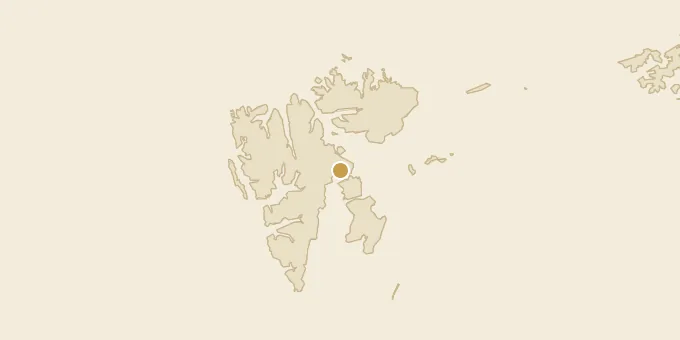
Scientists off Norway's Svalbard archipelago have tracked a blue whale nearly 1,000 feet underwater using a fiber-optic cable no wider than a human hair, even when the animal made no sound at all. The whale displaces so much water as it swims that it produces low-frequency waves, which stretch the buried glass cable almost imperceptibly. Onshore, laser pulses catch that faint disturbance. Usually the signal turns out to be a submarine or a passing ship. This time it was the largest animal on Earth, diving in silence. The team, led by geophysicist Martin Landrø of the Norwegian University of Science and Technology, borrowed a 1917 physics equation originally built to study collapsing bubbles. Bubbles and blue whales differ considerably in size, but the physics holds. Whales spend most of their lives underwater, where researchers have never really been able to watch them. Now a dormant strand of telecom glass can hear one swim past.